Soil isn’t just dirt—it’s a living, breathing foundation for all agriculture. Healthy soil grows healthy crops, stores carbon, filters water, and supports billions of microorganisms. But soil is also fragile. Erosion, overuse of chemicals, heavy tillage, and climate change can strip away fertile topsoil that took thousands of years to form.
That’s where soil conservation comes in.
⭐ What Is Soil Conservation?
Soil conservation refers to farming techniques and land-management practices that protect soil from erosion, improve soil structure, and maintain long-term fertility. It ensures the land stays productive for future generations.
Why Soil Conservation Is Important
🌱 Prevents soil erosion
Rain, wind, and runoff can wash away or blow away soil—but conservation methods help hold it in place.
💧 Improves water retention
Healthy soil can hold more moisture, reducing irrigation needs.
🌾 Boosts crop yields
Well-managed soil leads to stronger, more resilient plants.
🌍 Reduces carbon emissions
Conservation practices help store carbon in the ground, fighting climate change.
🦠 Supports biodiversity
Good soil is full of beneficial microbes, earthworms, and insects.
Top Soil Conservation Practices Used Worldwide
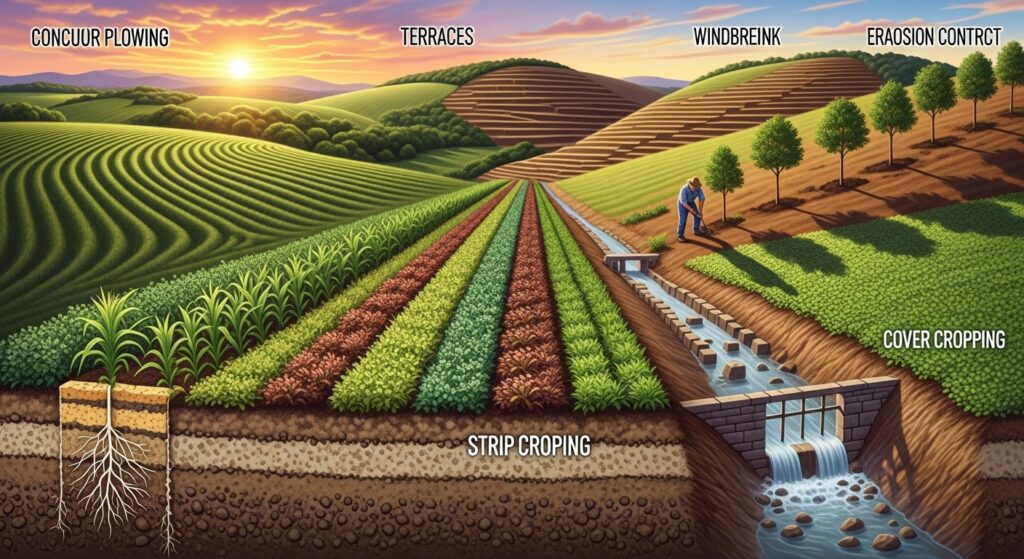
1. Cover Cropping
- Growing plants like clover, rye, or legumes during off-seasons
- Reduces erosion, adds organic matter, and improves soil structure
2. No-Till or Reduced Tillage
- Avoids disturbing soil with plowing
- Protects soil structure and increases organic carbon
3. Crop Rotation
- Planting different crops each season
- Reduces pests and diseases while improving nutrient balance
4. Contour Farming
- Planting along natural land contours
- Slows water runoff and minimizes erosion
5. Terracing
- Creating step-like fields on slopes
- Prevents soil loss in hilly areas
6. Mulching
- Adding straw, leaves, or plastic mulch
- Keeps soil moist, cool, and protected from erosion
7. Agroforestry
- Integrating trees with crops
- Trees prevent wind erosion and enrich soil with leaf litter
8. Organic Matter Addition
- Applying compost or manure
- Builds soil fertility and microbial life
How Soil Conservation Benefits Farmers
✔ Lower fertilizer costs
✔ Better yields year after year
✔ More resilience to drought & floods
✔ Protection of long-term land value
✔ Sustainable, eco-friendly farming reputation
Conclusion
Soil is the foundation of global food security. By practicing soil conservation, farmers protect the environment while improving productivity. Whether you’re a small grower or a large agribusiness, investing in soil health is investing in your future.