Organic farming is becoming one of the fastest-growing trends in global agriculture. With rising consumer demand for chemical-free, safe, and nutritious food, farmers are shifting from conventional farming to sustainable, eco-friendly organic practices. In 2025, organic farming is not just a trend—it is a profitable and future-ready way to farm.
🌱 What Is Organic Farming?
Organic farming is a method of crop and livestock production that avoids synthetic chemicals such as fertilizers, pesticides, growth hormones, or genetically modified organisms. Instead, it relies on natural inputs like compost, bio-manure, and biological pest control.
Organic agriculture aims to:
- Maintain long-term soil fertility
- Protect biodiversity
- Produce chemical-free, healthy food
- Promote sustainable farming ecosystems
🌾 Benefits of Organic Farming
1. Improves Soil Health
Organic matter such as compost and vermicompost increases soil fertility and microbial activity, resulting in healthy and productive soil.
2. Higher Market Prices
Organic produce sells for 20–80% higher price compared to conventional products, increasing farmer income.
3. Chemical-Free & Safe Food
Consumers today demand safe, toxin-free produce, boosting market demand for organic vegetables, fruits, grains, and dairy.
4. Environment-Friendly
Organic farming reduces pollution, prevents soil degradation, and conserves water.
5. Long-Term Profitability
Although initial yields may be lower, organic farms become more profitable over time due to better soil health and premium prices.
🔧 Popular Organic Farming Methods
1. Crop Rotation
Helps break pest cycles and improves soil nutrients.
2. Green Manuring
Leguminous plants improve nitrogen naturally.
3. Composting & Vermicomposting
Provides natural nutrients and improves soil structure.
4. Biological Pest Control
Using beneficial insects (ladybugs, Trichoderma, neem oil) instead of harmful pesticides.
5. Mulching
Reduces weed growth and conserves soil moisture.
💰 Is Organic Farming Profitable in 2025?
Yes, organic farming is more profitable than ever due to:
- Rapid increase in organic food demand
- Growing export markets
- Higher selling prices
- Government subsidies and certifications
Examples of profitable organic crops:
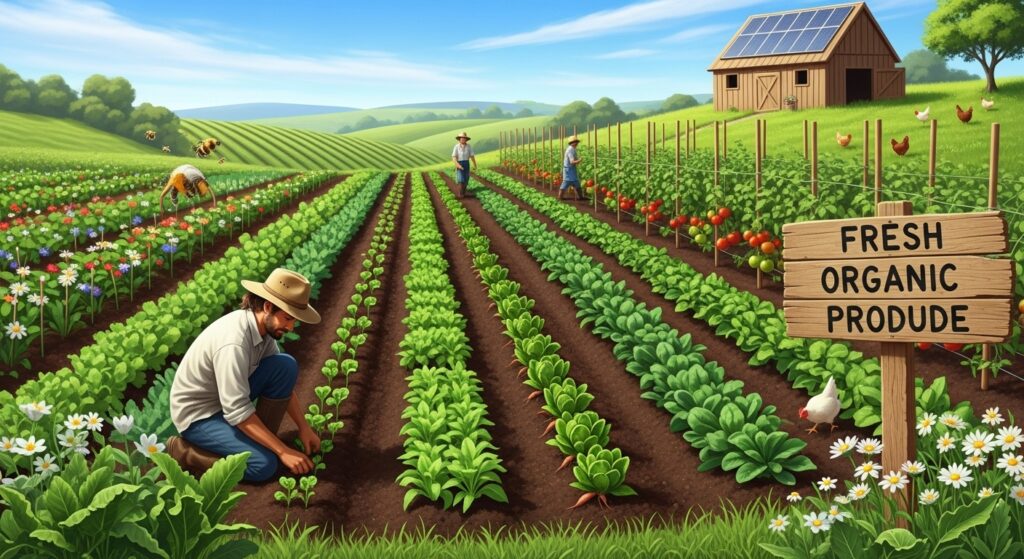
- Organic vegetables (spinach, tomatoes, carrots)
- Organic fruits (pomegranate, banana, mango)
- Organic grains (millets, wheat, rice)
- Organic herbs (coriander, basil, aloe vera)
🧭 How to Start Organic Farming
- Choose suitable land
- Improve soil using organic manure
- Select crops based on climate
- Use natural pest-management methods
- Apply for organic certification (NPOP/PGS)
- Sell produce through organic markets or online platforms
📌 Conclusion
Organic farming is the future of agriculture. It provides healthy food, protects the environment, and ensures long-term profitability for farmers. With rising demand and better awareness, 2025 is the best time to shift to organic agriculture.