
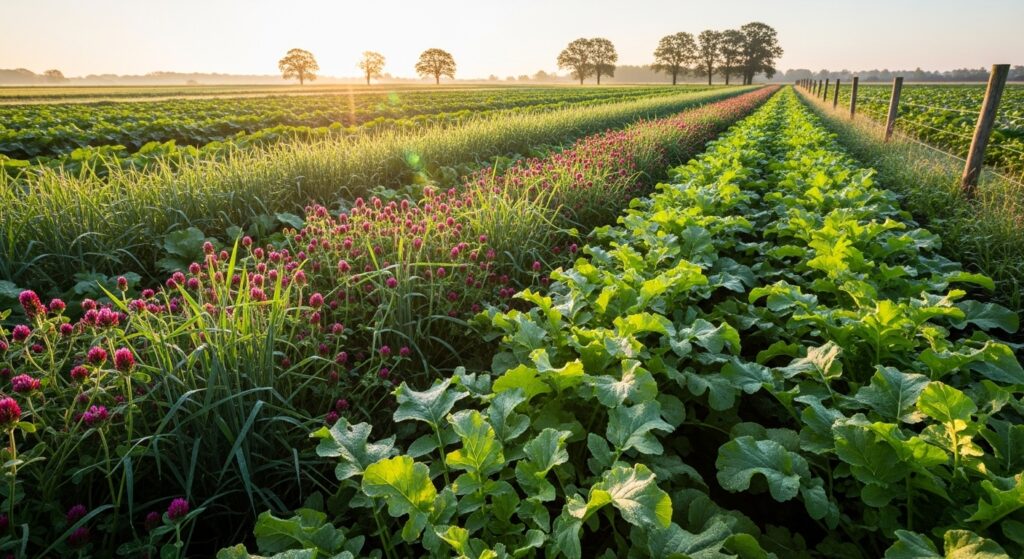
Cover crops are one of the most powerful tools in sustainable and regenerative agriculture. Farmers around the world use cover crops to rebuild soil health, improve fertility, suppress weeds, and protect the land during off-seasons.
Whether you grow vegetables, fruits, grains, or run a commercial farm, cover crops can transform your soil and boost long-term profitability.
🌿 What Are Cover Crops?
Cover crops are plants grown not for harvest, but to protect and improve the soil. They are typically planted during the off-season or between cash crops.
Common cover crop types include:
- Legumes (nitrogen fixers)
- Grasses (soil builders)
- Brassicas (deep root tillers)
- Mixtures of multiple species
Cover crops play a vital role in regenerative and organic farming.
⭐ Benefits of Cover Crops
1. Improve Soil Fertility
Legume cover crops like clover, beans, and vetch add natural nitrogen to the soil, reducing fertilizer costs.
2. Prevent Soil Erosion
Grasses and oats protect the soil from wind and rain, especially in winter.
3. Suppress Weeds
Fast-growing cover crops reduce weed growth naturally and lower herbicide use.
4. Enhance Soil Structure
Deep-rooted species (like radish) break compacted soil layers and improve aeration.
5. Increase Water Retention
Cover crops add organic matter, helping the soil store more water.
6. Boost Soil Microbial Life
Microorganisms thrive on cover crop roots, improving nutrient cycling.
7. Reduce Pest & Disease Pressure
Some cover crops release natural compounds that suppress soil pathogens.
🌾 Types of Cover Crops
1. Legume Cover Crops (Nitrogen Fixers)
- Clover
- Hairy vetch
- Field peas
- Lentils
- Alfalfa
Benefits: Add nitrogen, improve soil fertility, excellent for crop rotation.
2. Grass Cover Crops (Organic Matter Builders)
- Rye
- Oats
- Barley
- Sorghum
- Sudan grass
Benefits: Prevent erosion, add biomass, improve soil structure.
3. Brassica Cover Crops (Bio-tillers)
- Mustard
- Radish (Daikon radish)
- Rapeseed
Benefits: Break soil compaction, suppress diseases, improve drainage.
4. Multi-Species Cover Crop Mixes
Mixes combine legumes + grasses + brassicas.
Benefits: Balanced nitrogen, soil cover, deep rooting, weed control.
🌾 Best Cover Crops by Season
Winter Cover Crops
- Winter rye
- Clover
- Vetch
- Mustard
Summer Cover Crops
- Buckwheat
- Sunn hemp
- Cowpeas
- Sorghum-sudan grass
Off-Season / Intercropping Cover Crops
- Radish
- Oats
- Lentils
- Barley
🧑🌾 How to Plant Cover Crops (Simple Guide)
1. Choose the Right Species
Depends on the purpose: nitrogen, erosion protection, weed control, etc.
2. Prepare the Soil
Light tilling or no-till seeding works well.
3. Seed at the Proper Time
- Winter cover → Plant late summer or fall
- Summer cover → Plant after last frost
4. Irrigate if Needed
Most cover crops require minimal water.
5. Terminate at the Right Time
Cover crops should be cut or rolled down 2–3 weeks before planting the next cash crop.
Common termination methods:
- Mowing
- Rolling (roller-crimper)
- Cutting
- Grazing livestock
📈 Economic Benefits of Cover Crops
- Lower fertilizer costs
- Reduced herbicide use
- Improved long-term yields
- Better water efficiency
- Higher carbon in soil = long-term productivity
Many farmers see a 10–20% yield increase after consistent cover cropping.
🌍 Cover Crops in Regenerative Agriculture
Cover cropping is a core pillar of:
- No-till farming
- Organic farming
- Regenerative agriculture
- Climate-smart agriculture
It improves soil biology, builds carbon, and reduces chemical dependence.
📝 Conclusion
Cover crops are a simple yet incredibly effective way to improve soil health, reduce input costs, and increase yields. By integrating legumes, grasses, brassicas, or multi-species blends into your rotation, you create a healthier and more resilient farming system.
Whether you’re a small gardener or a commercial farmer, cover crops are a long-term investment with guaranteed benefits.