
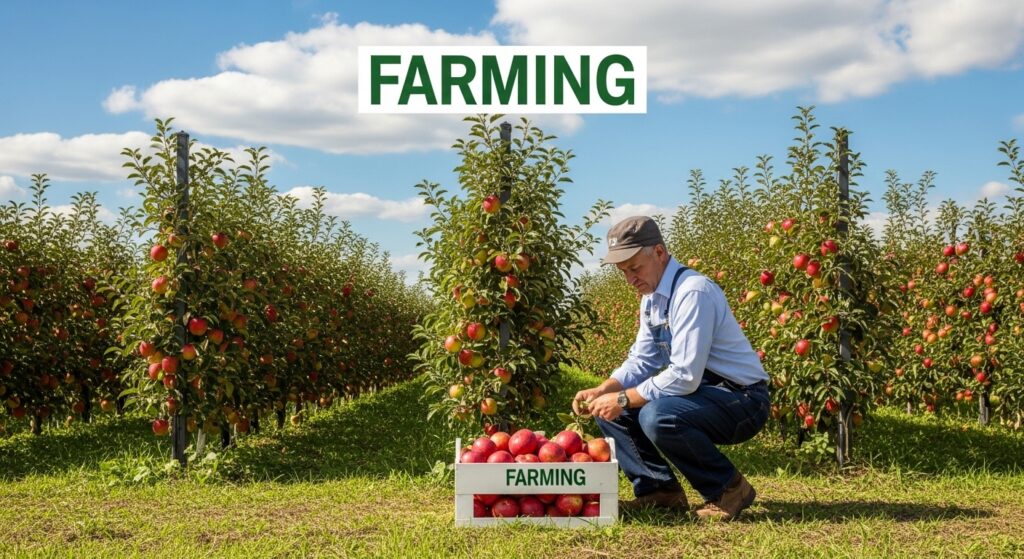
In many parts of the world — especially in regions like Himachal Pradesh, Kashmir, Uttarakhand, and northern states of India — apple farming is not just a way of life; it’s the backbone of the rural economy. From providing employment to driving export revenue, apple cultivation plays a vital role in strengthening both local and national economies.
🌱 Apple Farming: A Source of Livelihood
Apple farming supports millions of families — from orchard owners to laborers, transporters, packers, and traders. Every apple harvested creates jobs and income throughout the supply chain.
In India alone, apple cultivation directly and indirectly supports over 2 million people, contributing significantly to agricultural GDP.
📈 Contribution to Regional Development
Regions like Kashmir and Himachal Pradesh depend heavily on apple production for their economy. Apple farming contributes:
- Over ₹8,000 crore annually to the economy in these regions.
- Around 70–80% of total horticulture income in certain districts.
The income generated from apple farming helps build schools, roads, and better living conditions in rural communities.
🚜 Employment & Entrepreneurship
Apple farming creates employment at every stage — cultivation, harvesting, grading, packaging, cold storage, and marketing.
It has also given rise to new agripreneurs who are using modern techniques like:
- High Density Apple Farming
- Drip Irrigation & Fertigation
- Cold Chain Logistics
- Organic Apple Cultivation
These innovations are helping farmers increase yield, reduce losses, and export premium apples to global markets.
🌍 Apple Exports & National Growth
India exports thousands of tons of apples annually to countries like Nepal, Bangladesh, UAE, and Sri Lanka.
This export trade strengthens India’s position in the global fruit market, bringing valuable foreign exchange and boosting the country’s economy.
The global demand for fresh, organic, and high-quality apples continues to rise — creating even greater opportunities for Indian farmers to earn higher profits.
🌳 From Traditional to Modern Apple Farming
Modern technologies like high density plantations, greenhouse nurseries, cold storages, and climate-smart farming are revolutionizing the apple industry.
These innovations make apple farming more:
✅ Productive – more apples per acre
✅ Profitable – better prices and early returns
✅ Sustainable – less water and pesticide use
Farmers adopting high density apple farming are now getting 4–5 times higher yields and earning ₹5–10 lakh per acre annually, making apple cultivation one of the most lucrative farming ventures.
💡 Why Apple Farming Truly Is the Backbone
- Generates large-scale employment in hilly regions
- Drives agri-based industries like packaging, cold storage, and logistics
- Supports export revenue and foreign exchange
- Promotes sustainable rural development
- Strengthens food security and nutrition
When the apple industry thrives, entire communities prosper.
🍏 The Future of Apple Farming
With better technology, climate adaptation, and government support, apple farming is poised to grow even faster.
Investments in high density systems, research, and market linkages will ensure that apples remain a pillar of rural prosperity and a backbone of India’s agri-economy for decades to come.
🌤️ Final Thought
Apple farming isn’t just about growing fruits — it’s about nurturing livelihoods, empowering farmers, and fueling the rural economy.
Every apple harvested tells a story of hard work, hope, and growth — truly making apple farming the backbone of the economy. 🍎🌳💚