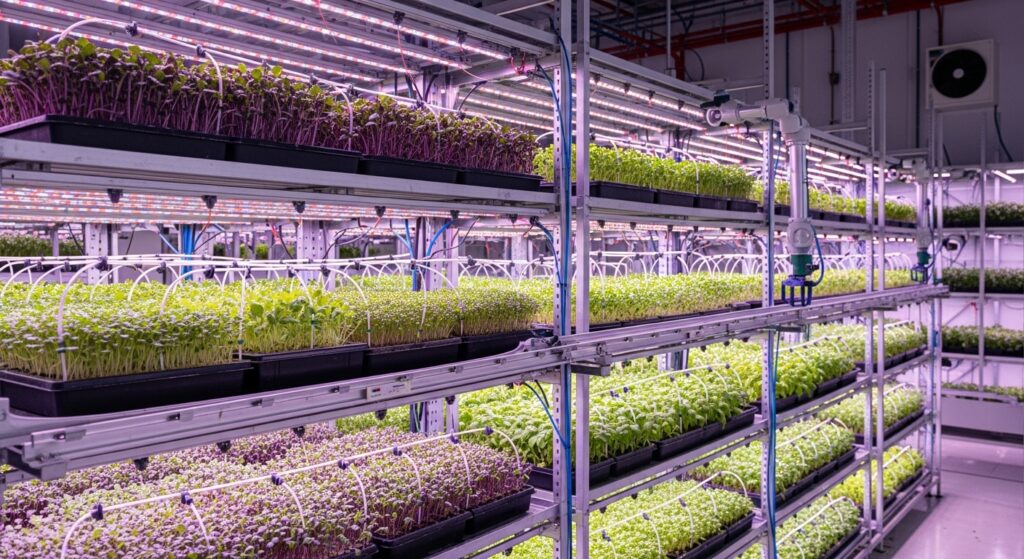
Microgreens farming is one of the fastest-growing and most profitable agribusiness opportunities worldwide. With rising demand for healthy, organic, and nutrient-dense foods, microgreens have become a popular choice for home growers, restaurants, chefs, and commercial farms. If you want a high-income, low-space farming business, microgreens farming is the perfect option.
🌿 What Are Microgreens?
Microgreens are young vegetable greens harvested 10–20 days after germination.
They are smaller than baby greens but packed with 5–40 times more nutrients than mature vegetables.
Common microgreens include:
- Sunflower
- Pea shoots
- Radish
- Broccoli
- Mustard
- Wheatgrass
- Basil
- Cilantro
⭐ Why Microgreens Farming Is Highly Profitable
✔ Grow in Very Small Space
Even a 10×10 ft room can produce a large quantity of microgreens.
✔ Fast Growth
- Ready in 7–14 days
- Multiple harvest cycles per month
✔ High Market Value
Retail price ranges from $20–40 per kg (or more) depending on region and variety.
✔ Low Investment
Requires:
- Trays
- Seeds
- Growing medium
- LED lights (optional)
✔ High Demand
Popular among:
- Restaurants & hotels
- Health-conscious consumers
- Grocery stores
- Smoothie bars
🧪 How to Start Microgreens Farming (Step-by-Step)
1. Choose Microgreens Varieties
Beginner-friendly:
- Radish
- Pea
- Sunflower
- Broccoli
- Mustard
High-value premium varieties:
- Basil
- Cilantro
- Red amaranth
- Beet greens
2. Prepare the Growing Trays
- Use 10×20 trays (with or without holes)
- Fill with coco peat, soil mix, or grow mats
- Level and lightly compress the growing medium
3. Sow the Seeds
- Spread evenly
- Mist water to activate germination
- Cover with another tray for 2 days (blackout period)
4. Germination (Day 1–3)
- Keep in dark
- Maintain moisture
- Seeds sprout quickly
5. Light Exposure (Day 3–10)
- Remove the top tray
- Give indirect sunlight or LED grow lights
- Water gently from sides or bottom tray
- Microgreens turn bright green
6. Harvesting (Day 7–14)
- Use clean scissors
- Cut just above the soil line
- Do not wash unless necessary
- Pack immediately for freshness
💼 Business & Marketing Tips
Sell to
- Restaurants & cafes
- Hotels
- Juice bars
- Organic stores
- Farmers markets
- Direct to customers via WhatsApp, Instagram, Facebook
Offer Value-Added Products
- Microgreens salad mix
- Smoothie microgreen packs
- Microgreen powder (dehydrated)
- Ready-to-grow microgreen kits
Branding Tips
- Use eco-friendly packaging
- Emphasize “fresh”, “organic”, “chemical-free”
- Provide recipe cards with each order
📈 Income Potential (Example Calculation)
For a small 10×10 ft setup:
- 30–50 trays capacity
- Each tray gives 250–350 grams
- Wholesale price: $10–15 per tray equivalent
- Monthly cycles: 3–4
Estimated Monthly Profit: $500–1500+
(Varies based on market, varieties, and consistency)
Larger setups can generate $3,000–10,000/month.
🌍 Sustainable Benefits
Microgreens farming is:
- Water-efficient
- Space-efficient
- Chemical-free
- Suitable for urban areas
- Ideal for home-based entrepreneurs
📝 Conclusion
Microgreens farming is one of the best modern agriculture businesses for beginners, small farmers, and urban growers. With low investment, fast harvest cycles, and high market demand, it offers excellent income potential. Whether you grow for personal use or commercial sale, microgreens are a profitable, scalable, and sustainable farming venture.